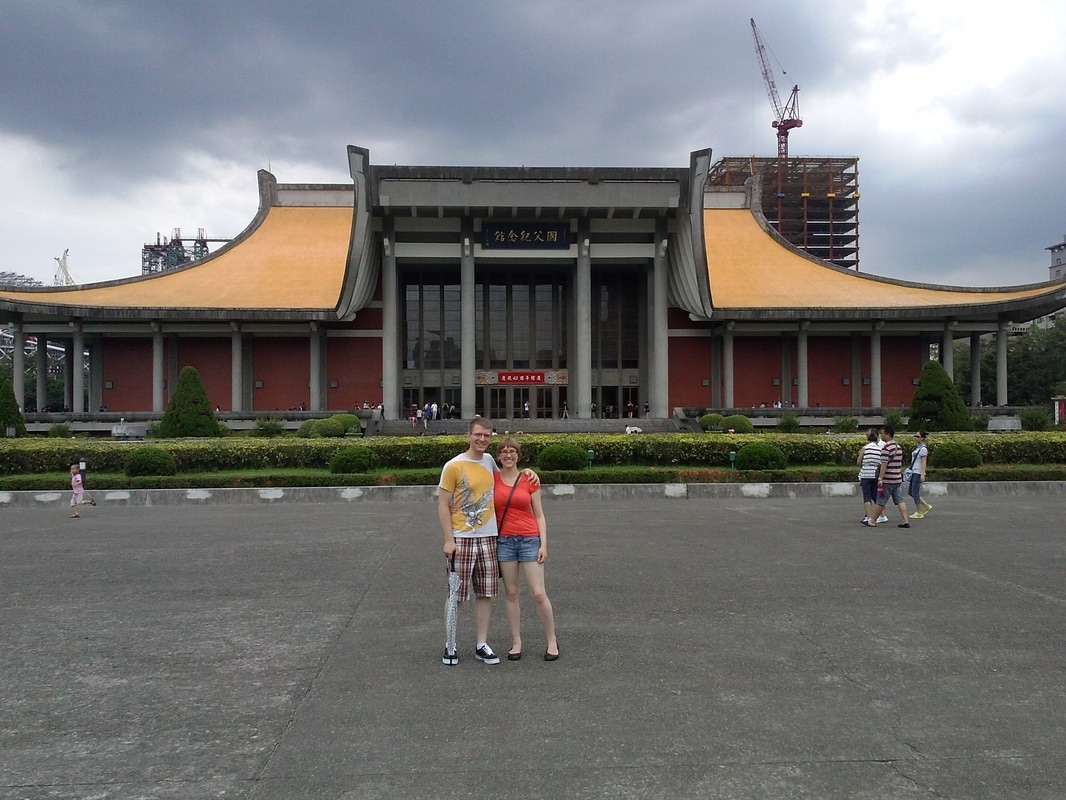
After enjoying our delicious lunch of soup dumplings, Justin, our friend and I parted ways with her family and headed out to see some awesome Taipei architecture. Our first stop was the Sun Yat-Sen Memorial Hall. The building is dedicated to the founding father and first president of the Republic of China. He also established the Kuomintang Party, one of the major parties in Taiwan. He was instrumental in overthrowing the Qing Dynasty, which was China’s last imperial dynasty. When the Republic of China lost to the communists in 1949, they retreated to Taiwan, while still considering themselves to be the true government of China.
Sun Yat-Sen is regarded as an important historical figure for both mainland Chinese as well as Taiwanese. As such, people from both sides of the Taiwan Strait make pilgrimages to his memorial hall. For Taiwanese, his philosophical ideals, called “The Three Principals of the People,” are the important core to their nation. Summed up briefly, his principals include nationalism (independence), democracy, and livelihood (free trade). He was the mentor and inspiration for many of Taiwan’s other famous leaders.
The Sun Yat-Sen Memorial Hall is minimalistic in design, with an elegantly swooping roof, tiled in auspicious yellow. The roof is supported by large columns surrounding a red-brick exterior. Outside the building are artfully landscaped gardens of the Chung-Shan Park. Taiwanese people are inclined to utilize their public spaces, so we saw many groups practicing various routines or exercises on its surrounded patios, including elderly citizens practicing tai chi and a young group running through their hip-hop performance. Inside, a vast tiled room houses a large statue of Sun Yat-Sen, seated and looking out. Throughout the hall you can find displays detailing the history of the Sun Yat-Sen, the wars he fought in, and the early establishment of Taiwan.
The Sun Yat-Sen Memorial Hall is minimalistic in design, with an elegantly swooping roof, tiled in auspicious yellow. The roof is supported by large columns surrounding a red-brick exterior. Outside the building are artfully landscaped gardens of the Chung-Shan Park. Taiwanese people are inclined to utilize their public spaces, so we saw many groups practicing various routines or exercises on its surrounded patios, including elderly citizens practicing tai chi and a young group running through their hip-hop performance. Inside, a vast tiled room houses a large statue of Sun Yat-Sen, seated and looking out. Throughout the hall you can find displays detailing the history of the Sun Yat-Sen, the wars he fought in, and the early establishment of Taiwan.
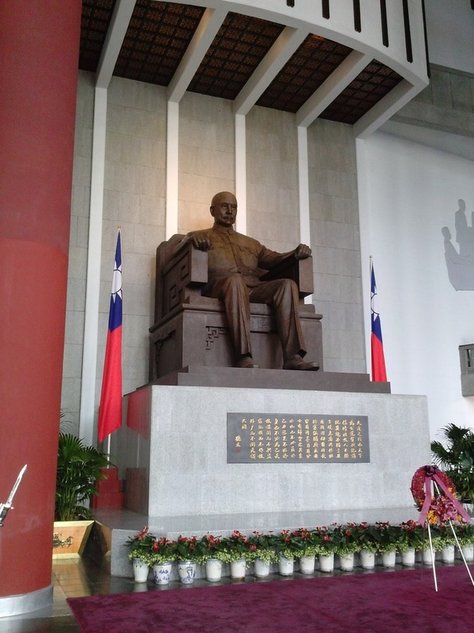
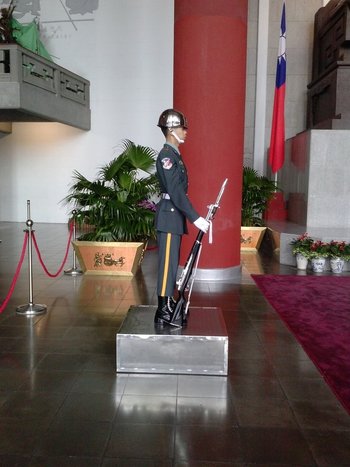
The statue itself is guarded by two sharply dressed soldiers. They stand there as still as statues themselves for an entire hour. At the end of their shift, another set of guarded comes to replace them. They switch is accompanied by strict ceremony, slow and deliberate. Many tourists come close to the hour mark in order to observe the change of guards. Luckily, we arrived at the perfect time to watch! The precision of their movements was truly impressive, but if you have small children it might be unbearably slow for them.
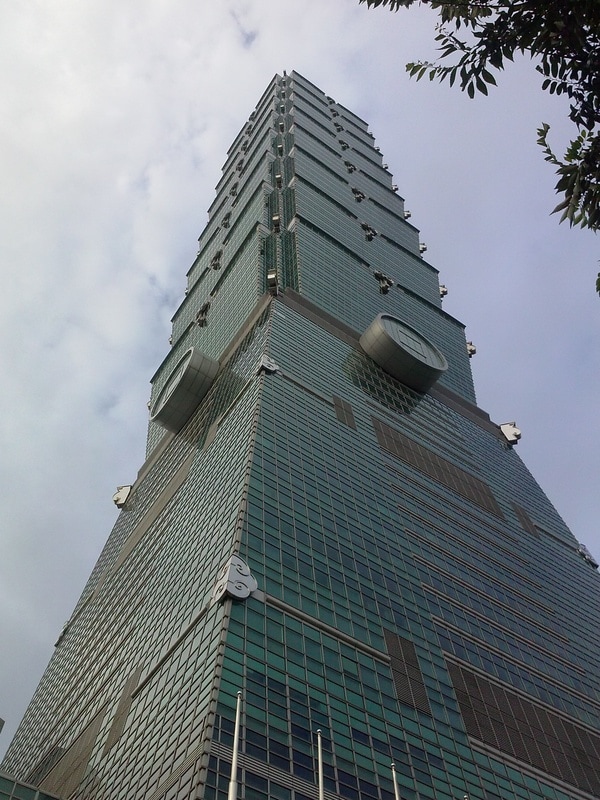
After walking through the Memorial Hall, we ventured outside again to make our way to the most famous building of Taipei: Taipei 101. A short couple of blocks from the Sun Yat-Sen Memorial, Taipei 101 rises over the city, an iconic landmark easily spotted wherever you may be. While it only held the title of Tallest in the World from 2004 until 2010, it is nevertheless an impressive structure to behold. Reminiscent of traditional Chinese architecture with its stepped pattern, the single glass tower juts into the sky, peaking with a smaller, pointed turret. The tower strikes many dramatic visages depending on the time of day or the angle at which you gaze up at it.
After walking through the Memorial Hall, we ventured outside again to make our way to the most famous building of Taipei: Taipei 101. A short couple of blocks from the Sun Yat-Sen Memorial, Taipei 101 rises over the city, an iconic landmark easily spotted wherever you may be. While it only held the title of Tallest in the World from 2004 until 2010, it is nevertheless an impressive structure to behold. Reminiscent of traditional Chinese architecture with its stepped pattern, the single glass tower juts into the sky, peaking with a smaller, pointed turret. The tower strikes many dramatic visages depending on the time of day or the angle at which you gaze up at it.
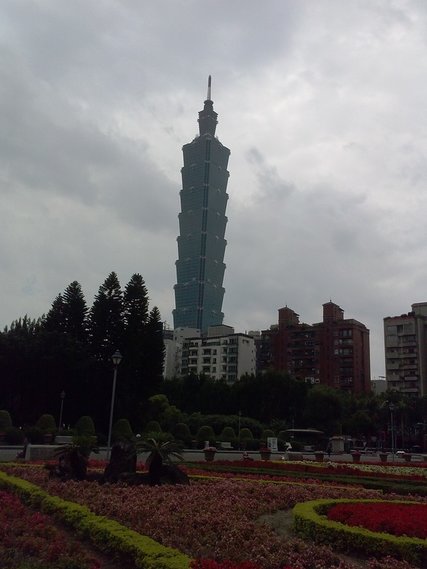
Designed by C.Y. Lee, it is an environmentally friendly building serving multiple functions. Much of the building serves as office space for wealthy companies. Another section is a high end shopping mall with an extensive and affordable food court. The interior is spotless and glossy, reminding us always of the hefty price tags inside the stores. Obviously, the most important part for Justin and I was to be able to go up to the top observatory.
Going to the top costs 500NT per person (about $15 USD). You stand in a line to get tickets and then go stand in another, sometimes very long line to get into the elevator. On the way there you can get your picture taken with Taipei 101 digitally added as a back drop. Justin and I opted out. When you cram into the elevator, it takes you to the top in a manner of seconds. You can feel your ears pop on the way while you enjoy a brief light show in the dark box.
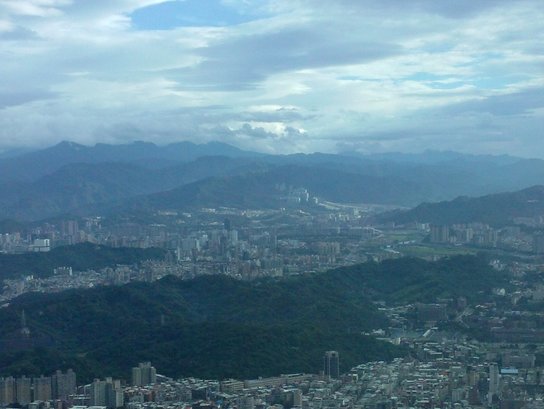
At the top a 360 degree glass observatory awaits you, looking out onto all reaches of the city. The view feels different depending on whether you go during the day or at night. Justin and I did both at separate times. During the day you can see the detail on all the buildings and the beauty of the hills surrounding the city. Sometimes the smog can be terrible, making visibility low, but it’s still a great view. At night, the city and car lights make for a dazzling display. It’s fun to try to find places in the city you’ve visited. The gardens outside the Sun Yat-Sen Memorial Hall are especially pretty, as their special designs are better appreciated from the air. The observatory also houses a large display of art made from orange coral. You can even step outside onto a gated observatory platform where the wind pulls at your hair and clothes.
Going to the top costs 500NT per person (about $15 USD). You stand in a line to get tickets and then go stand in another, sometimes very long line to get into the elevator. On the way there you can get your picture taken with Taipei 101 digitally added as a back drop. Justin and I opted out. When you cram into the elevator, it takes you to the top in a manner of seconds. You can feel your ears pop on the way while you enjoy a brief light show in the dark box.
At the top a 360 degree glass observatory awaits you, looking out onto all reaches of the city. The view feels different depending on whether you go during the day or at night. Justin and I did both at separate times. During the day you can see the detail on all the buildings and the beauty of the hills surrounding the city. Sometimes the smog can be terrible, making visibility low, but it’s still a great view. At night, the city and car lights make for a dazzling display. It’s fun to try to find places in the city you’ve visited. The gardens outside the Sun Yat-Sen Memorial Hall are especially pretty, as their special designs are better appreciated from the air. The observatory also houses a large display of art made from orange coral. You can even step outside onto a gated observatory platform where the wind pulls at your hair and clothes.
On the way down, you can look at the innovative solution for keeping Taipei 101 safe during Taiwan’s frequent earthquakes called a tuned mass damper. A giant gold ball held up by thick metal ropes stabilizes the building as it sways. The damper inspired the building’s cutesy mascot, called Damper Baby, who greets you at various locations throughout Taipei 101. Damper technology is not rare, but no one does it as adorably as Taipei 101.
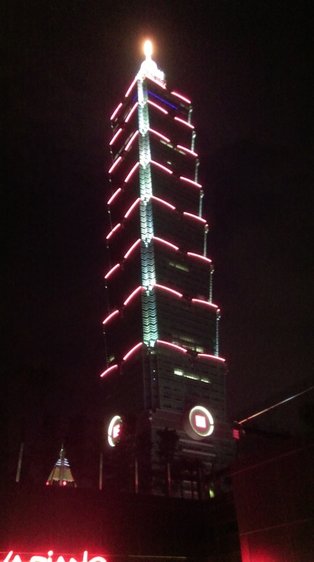
To me, however, Taipei 101 is best appreciated from the outside. At night, the building is lit up in an array of colors which change slowly. Craning your neck to look straight up the building has a dizzying effect. If you get the chance to visit, shoot for New Years, when fireworks are famously shot off the sides of the building in a dazzling display. Unfortunately our work schedule would not have allowed us to make the show, and I heard that the shows may stop because of another sky-scraper that is being built nearby. So visit soon!
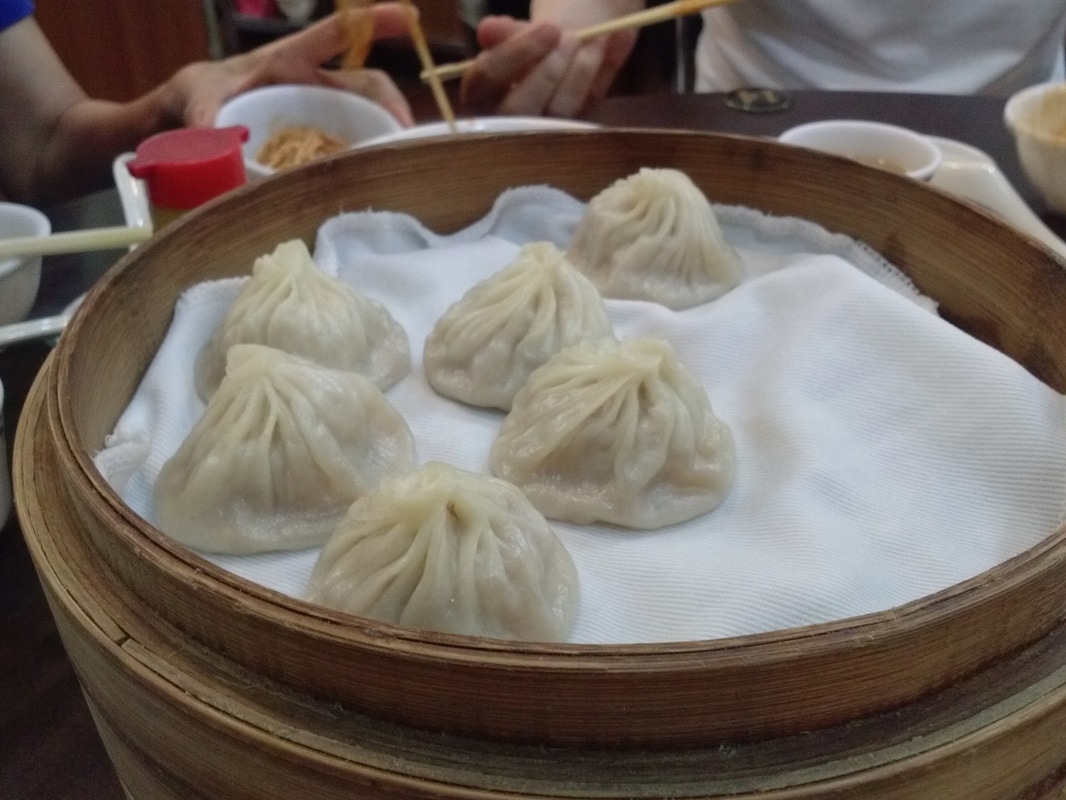
Another great reason to visit Taipei 101 is to eat at its most famous restaurant, Din Tai Feng. Awarded an elusive Michelin Star, this restaurant is most famous for its soup dumplings. We ate there the second time we visited Taipei 101, when Justin’s parents came to visit us in October. The wait to get in is very long—you sign up for a ticket and get assigned a number. Be prepared for an hour wait on even a slow Tuesday, longer if it’s busy or the weekend. They don’t take reservations, so plan to get your number and do some shopping in the meantime.
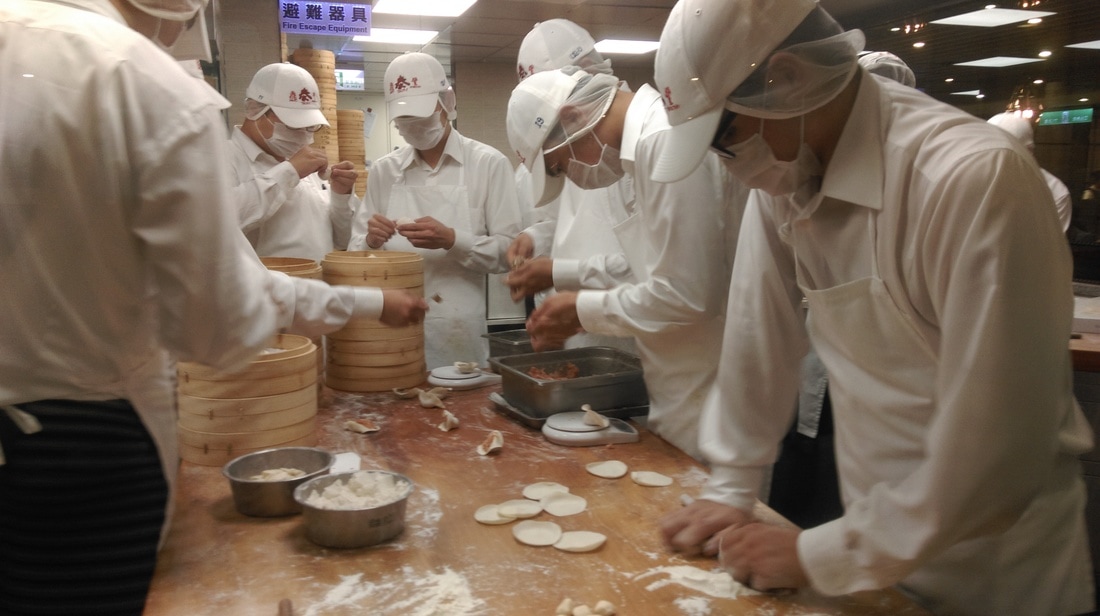
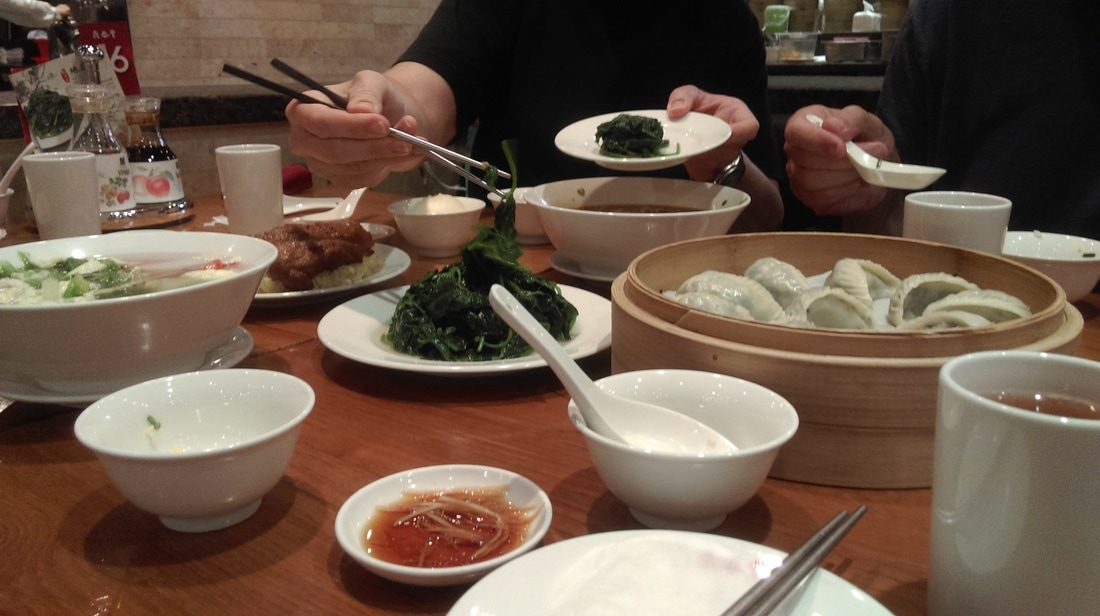
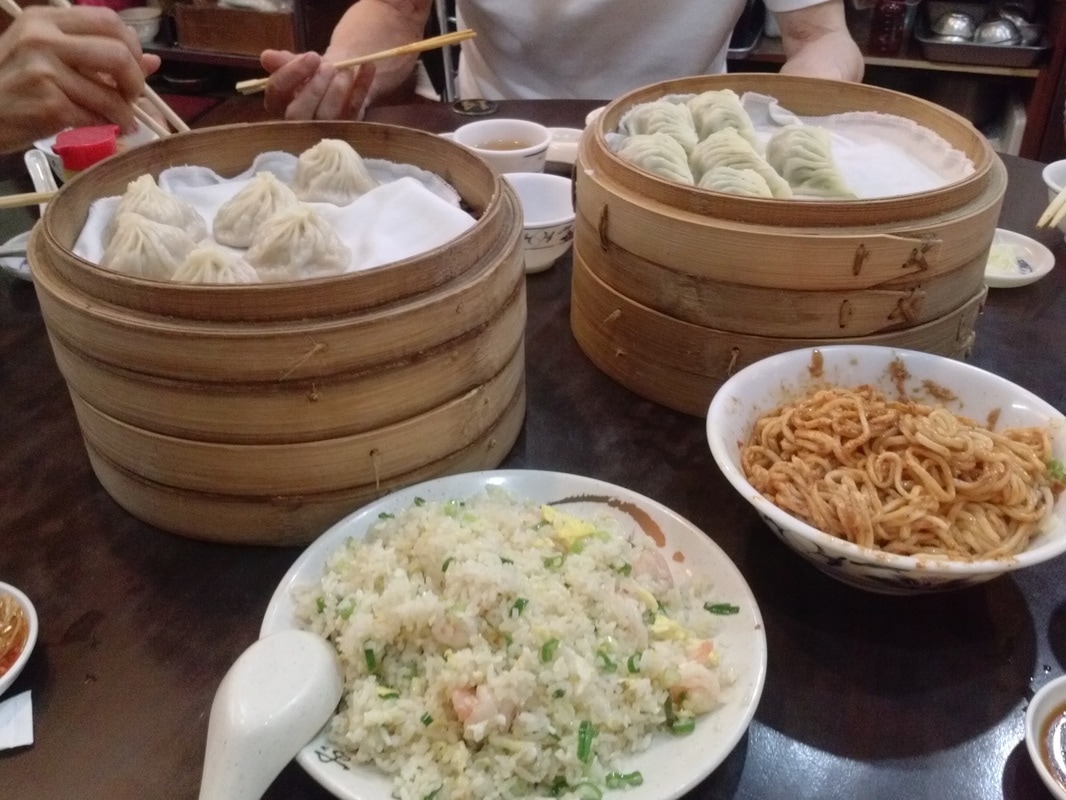
Before you are seated you can watch the chefs making the dumplings. Once you are seated, a clean menu complete with English translations as well as pictures is presented to you. Obviously we ordered several baskets of soup dumplings, but also steamed BBQ pork buns, beef noodle soup, and fried rice with spiced pork. The dumplings were the star the show, of course, but BBQ pork buns and beef noodle soup were also deliciously satisfying. The fried rice was a revelation. The pork was a perfect burst of flavor, but the fried rice was the most sophisticated tasting fried rice I’ve ever had. Made simply with egg and green onions, the distinct flavors of each ingredient really stood out. I’m drooling just remembering it. Din Tai Feng clearly deserves that Star. It’s also surprisingly affordable. For four people we managed to feast for about $80.
To me, however, Taipei 101 is best appreciated from the outside. At night, the building is lit up in an array of colors which change slowly. Craning your neck to look straight up the building has a dizzying effect. If you get the chance to visit, shoot for New Years, when fireworks are famously shot off the sides of the building in a dazzling display. Unfortunately our work schedule would not have allowed us to make the show, and I heard that the shows may stop because of another sky-scraper that is being built nearby. So visit soon!
Another great reason to visit Taipei 101 is to eat at its most famous restaurant, Din Tai Feng. Awarded an elusive Michelin Star, this restaurant is most famous for its soup dumplings. We ate there the second time we visited Taipei 101, when Justin’s parents came to visit us in October. The wait to get in is very long—you sign up for a ticket and get assigned a number. Be prepared for an hour wait on even a slow Tuesday, longer if it’s busy or the weekend. They don’t take reservations, so plan to get your number and do some shopping in the meantime.
Before you are seated you can watch the chefs making the dumplings. Once you are seated, a clean menu complete with English translations as well as pictures is presented to you. Obviously we ordered several baskets of soup dumplings, but also steamed BBQ pork buns, beef noodle soup, and fried rice with spiced pork. The dumplings were the star the show, of course, but BBQ pork buns and beef noodle soup were also deliciously satisfying. The fried rice was a revelation. The pork was a perfect burst of flavor, but the fried rice was the most sophisticated tasting fried rice I’ve ever had. Made simply with egg and green onions, the distinct flavors of each ingredient really stood out. I’m drooling just remembering it. Din Tai Feng clearly deserves that Star. It’s also surprisingly affordable. For four people we managed to feast for about $80.
 |  |
Although Taipei 101 is perhaps the most clichéd sight to visit in Taipei, I highly recommend it. Being able to see the veins of Taipei is an experience that should not be passed up.
 RSS Feed
